
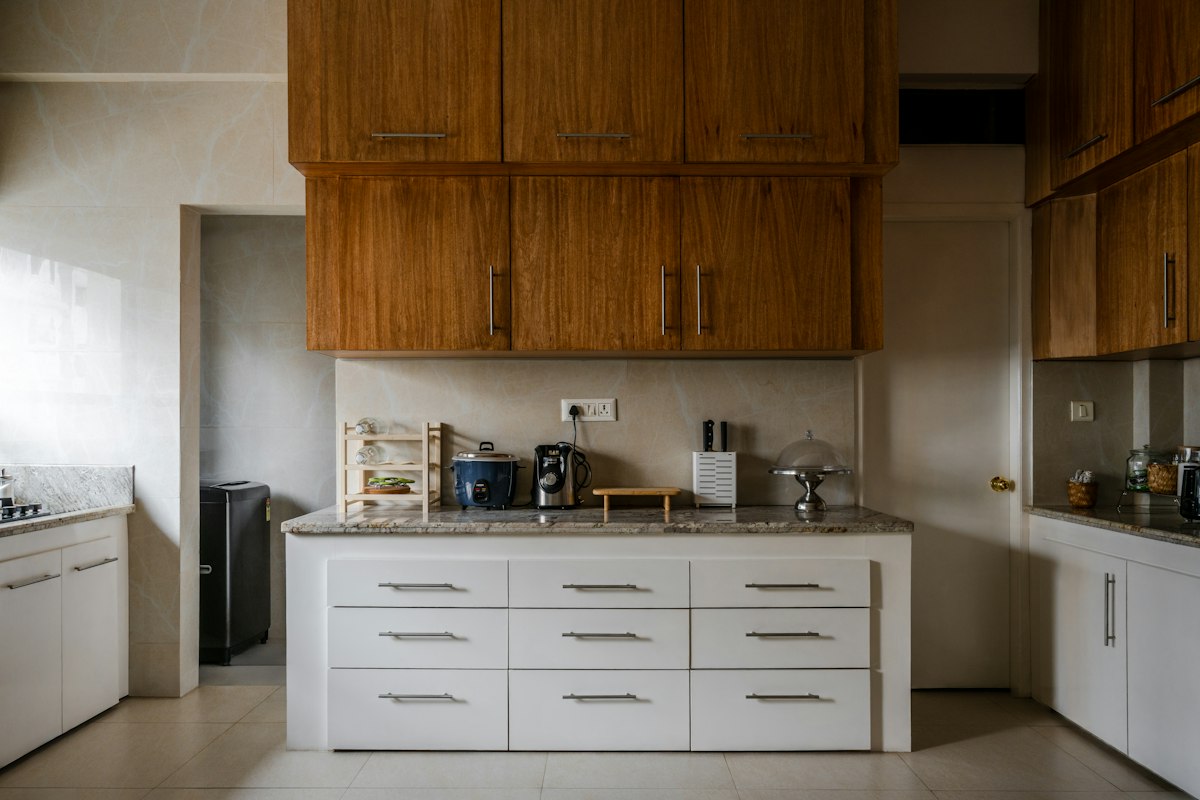
Deep Kitchen Drawers: Organise the Weight Before Ordering
Deep drawers can replace a cupboard full of stacked cookware, but their value depends on the items inside and on the hardware specified for the load.
Empty one existing cupboard and group its contents by task. Pots, plates, baking trays and dry ingredients each have different heights and shapes. Pay particular attention to heavy cast-iron pots and dishes. A drawer packed with heavy items is very different from one filled with tea towels, even if the two drawer fronts look identical.
Match the fittings to the contents
Ask the cabinet supplier for internal dimensions and hardware load ratings applicable to the installed configuration. Compare usable depth after accounting for runners and the drawer box. A tall front does not guarantee the same amount of usable height behind it. Dividers can help stop pans moving but will also occupy space.
Put everyday items within reach
Imagine unloading the dishwasher and preparing a meal. Locate everyday crockery and cooking tools so they can be reached comfortably without repeated awkward lifting. Less frequently used items can be stored farther from the main work area. Test drawer and nearby door openings on the plan.
Plan what you will keep
Do not order storage based on every item in the current kitchen without deciding what is still useful. Keep a short inventory and ask the designer to explain which drawer will hold each heavy group. The result is a storage plan, not just a count of cabinets.
For a US cabinet order, distinguish drawer front dimensions from usable interior dimensions in the supplier’s measurement system.
Further reading
FTC — Home improvement consumer guidance
Photo: Sanju Pandita / Unsplash. Stock image for context; not a photograph of a project reviewed in this article.