
A Kitchen Sink Upgrade That Works With Your Daily Routine
One larger sink is not automatically better than two smaller bowls. Start with the pans you wash, the dishwasher you use and the space needed for preparation.
Measure the largest roasting tray or pot that you routinely clean. Consider whether it needs to lie flat, whether you normally rinse vegetables while dishes are soaking and where wet items will drain. Take those measurements when comparing sink displays. A particularly deep bowl may make some tasks uncomfortable for shorter users or people with limited reach.
Review the space below
The finished unit has to accommodate the bowl, drain fittings, water lines and any waste system. Ask the plumber and cabinet supplier to confirm compatibility before ordering, including access for future maintenance. The position of a mixer handle also matters if there is a wall or window immediately behind the tap.
Think about water on the counter
Check how the selected sink meets the worktop, where water will collect and whether the surface is suitable for the proposed mounting arrangement. Compare care instructions for stainless steel, composites or other materials instead of assuming a particular material is stain-proof.
Keep the evidence
Include the sink and tap model, dimensions, installation requirements and finish in the written order. Have plumbing connections and any required protection installed by a suitably qualified person. Ask for a demonstration of normal drainage and check the accessible cupboard for leaks during handover, without disturbing any fittings.
When shopping in Australia, take the sink cutout and tap-hole specifications to both the benchtop supplier and plumber.
Further reading
Australian Government YourHome — Renovations and additions
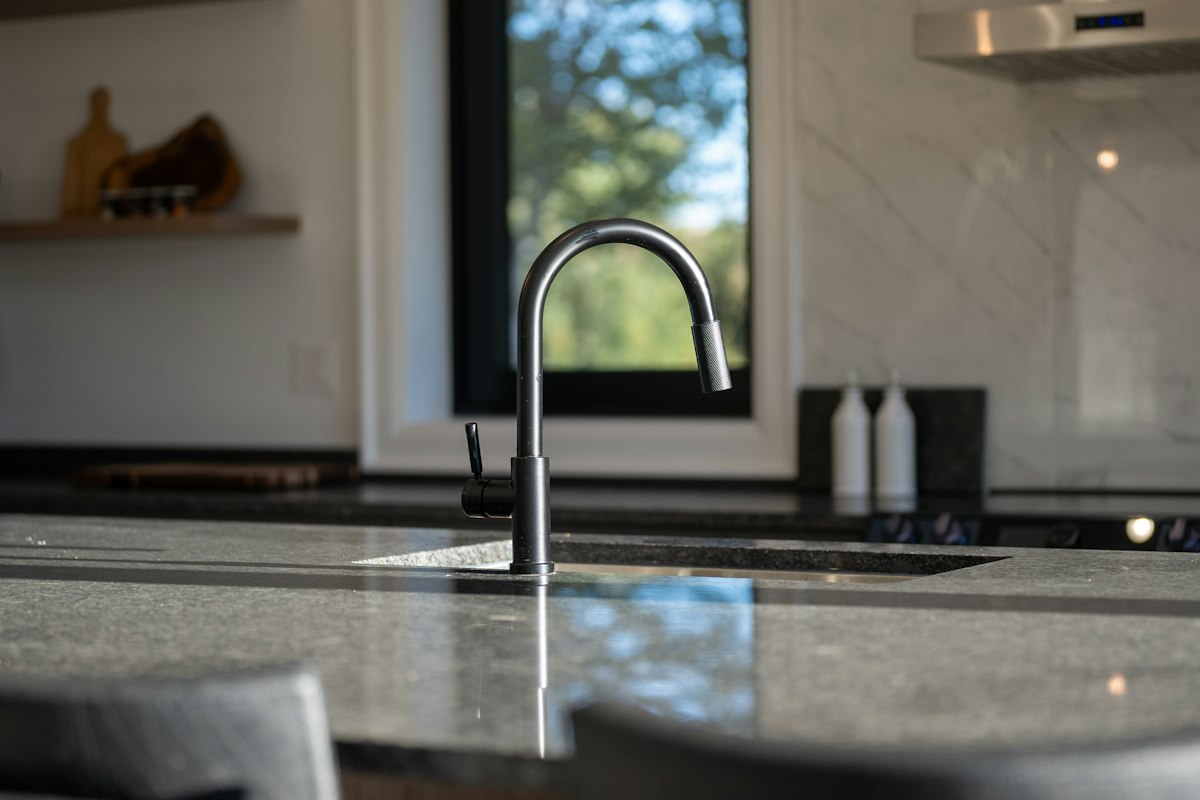
Photo: Franco Debartolo / Unsplash. Stock image for context; not a photograph of a project reviewed in this article.