
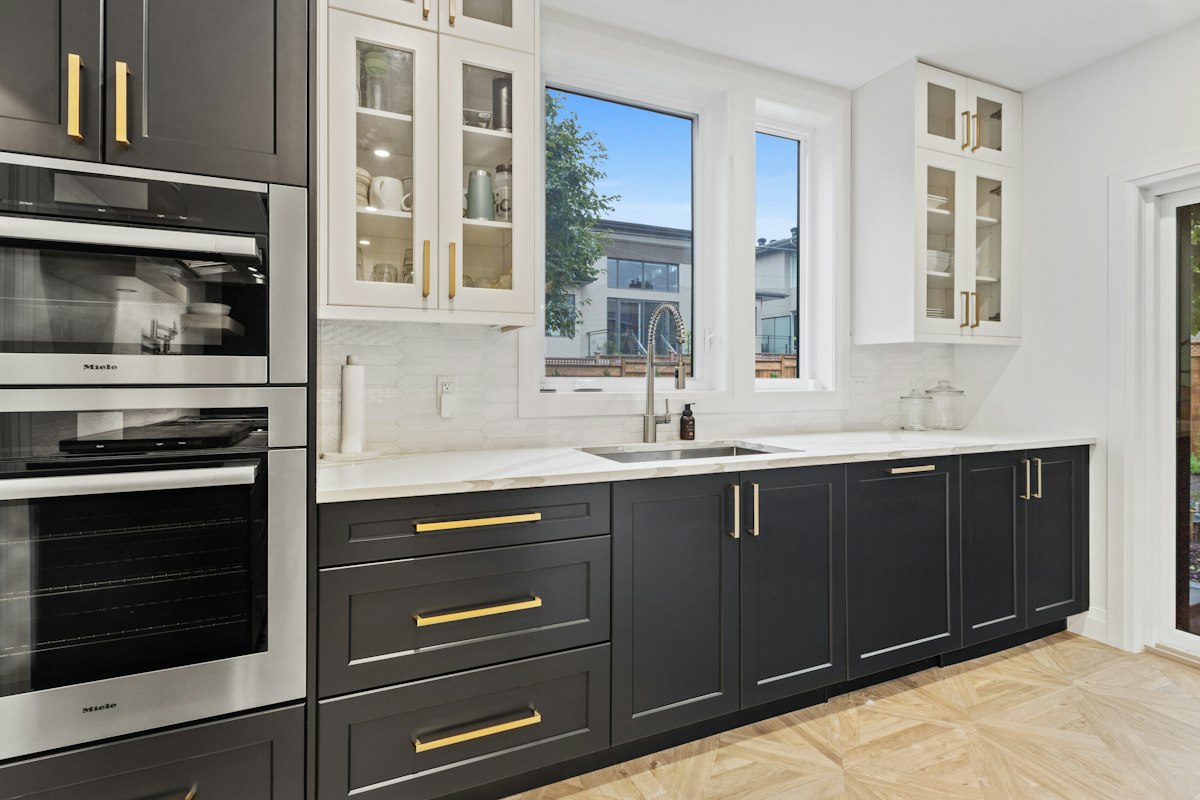
Choosing Kitchen Cabinet Finishes for a Busy Household
A cabinet sample tells you how a finish looks, but not how it handles greasy fingers, sunlight or repeated cleaning. Match the finish to the work your household does.
Dark matte doors can show fingerprints in certain light, while glossy doors make some scratches more noticeable. Textured surfaces may hide small marks but collect grime around handles and edges. Before choosing, hold samples vertically near a window and under evening lighting, rather than viewing them flat on a showroom counter.
Look past the front face
Ask what material forms the door, how its edges are sealed and how the finish can be cleaned. Request the manufacturer's care instructions. An inexpensive panel may be appropriate in a dry pantry while the area around a sink requires greater attention to moisture and installation details. Inspect the inside surface as well as the decorative exterior.
Make a cleaning trial
Ask whether you can take an offcut home. With the supplier's agreement, wipe it with an approved cleaner and check how the surface looks once dry. Do not assume that an abrasive pad or solvent is safe. If the design includes a painted finish, find out whether scratches can be touched up or whether replacement doors are the usual remedy.
Keep replacement options in the contract
Record the colour reference, finish name, cabinet range and warranty exclusions. A consistent record is valuable if a door later needs ordering. Select a finish whose required care fits your routine, not just its first-day appearance.
For a UK supplier, keep the door range and finish code together, especially where a kitchen combines standard and bespoke units.
Photo: Point3D Commercial Imaging Ltd. / Unsplash. Stock image for context; not a photograph of a project reviewed in this article.