
What to Ask About Cooking Odours Before a Kitchen Remodel
If cooking smells linger in bedrooms or on soft furnishings, a renovation is a chance to review how kitchen air is actually removed.
Observe the problem on a normal cooking day. Is steam collecting on windows? Does frying produce odours that are noticeable outside the room? Does the noise of the existing fan discourage people from turning it on? Record which windows and doors are normally open. These details help a designer distinguish between a problem with capture, airflow and the way the room is used.
Consider the proposed cooking equipment
Tell the installer whether the household cooks on gas or electricity and whether frequent high-heat cooking is expected. The ventilation design needs to suit the appliance and local building requirements. A hood's advertised airflow alone cannot establish how much air it will move once connected to a particular duct route.
Make the destination of the air clear
Ask whether the design extracts outdoors or filters and recirculates air, what filters need maintenance and where an external outlet would be located. Have a qualified professional consider make-up air and any combustion appliances in the home. Do not create or modify a ventilation opening without appropriate assessment.
Include the controls in the handover
Ask to hear the fan at different settings and learn how to reach the filters. Note the replacement part numbers and cleaning instructions. The best system is not merely powerful on paper; it is one that the household will consistently use.
In UK homes with existing combustion appliances, raise the ventilation arrangement with the qualified installer before finalising the kitchen design.
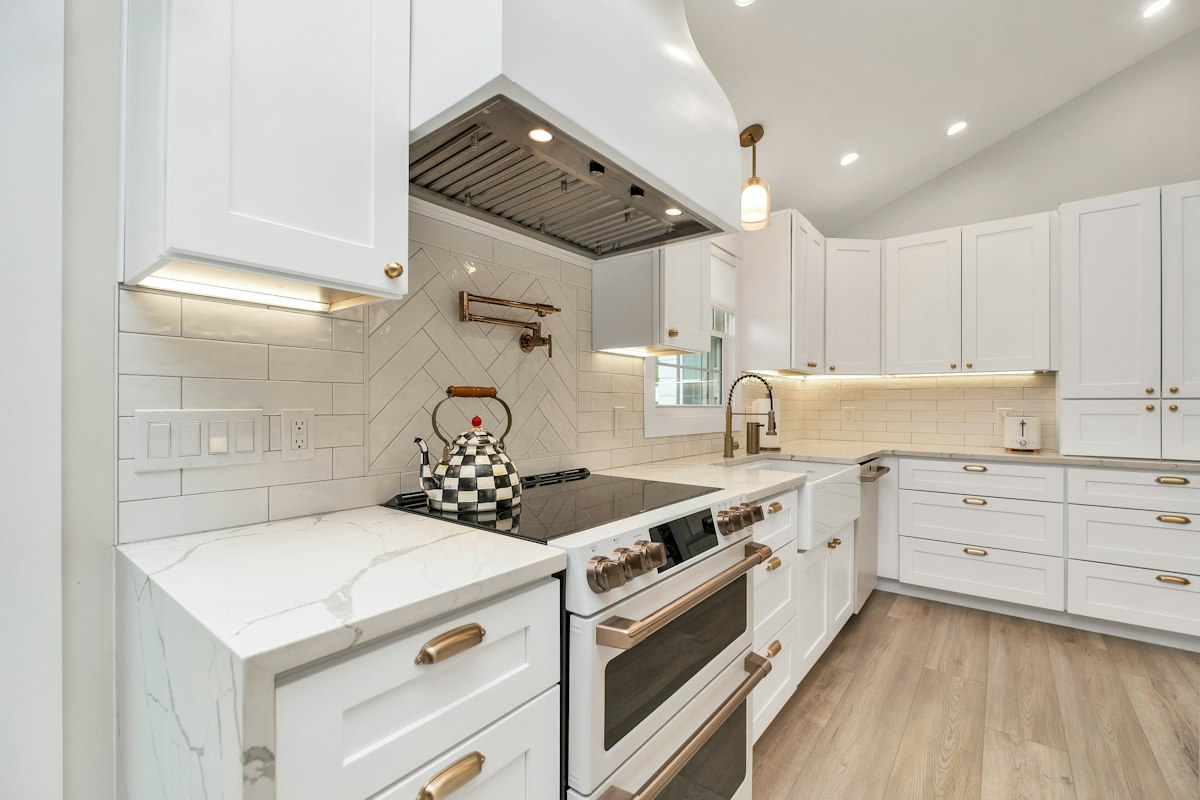
Photo: Zac Gudakov / Unsplash. Stock image for context; not a photograph of a project reviewed in this article.